BPT Course Myths: 5 Things Students Get Wrong About Physiotherapy at Rayat Bahra University
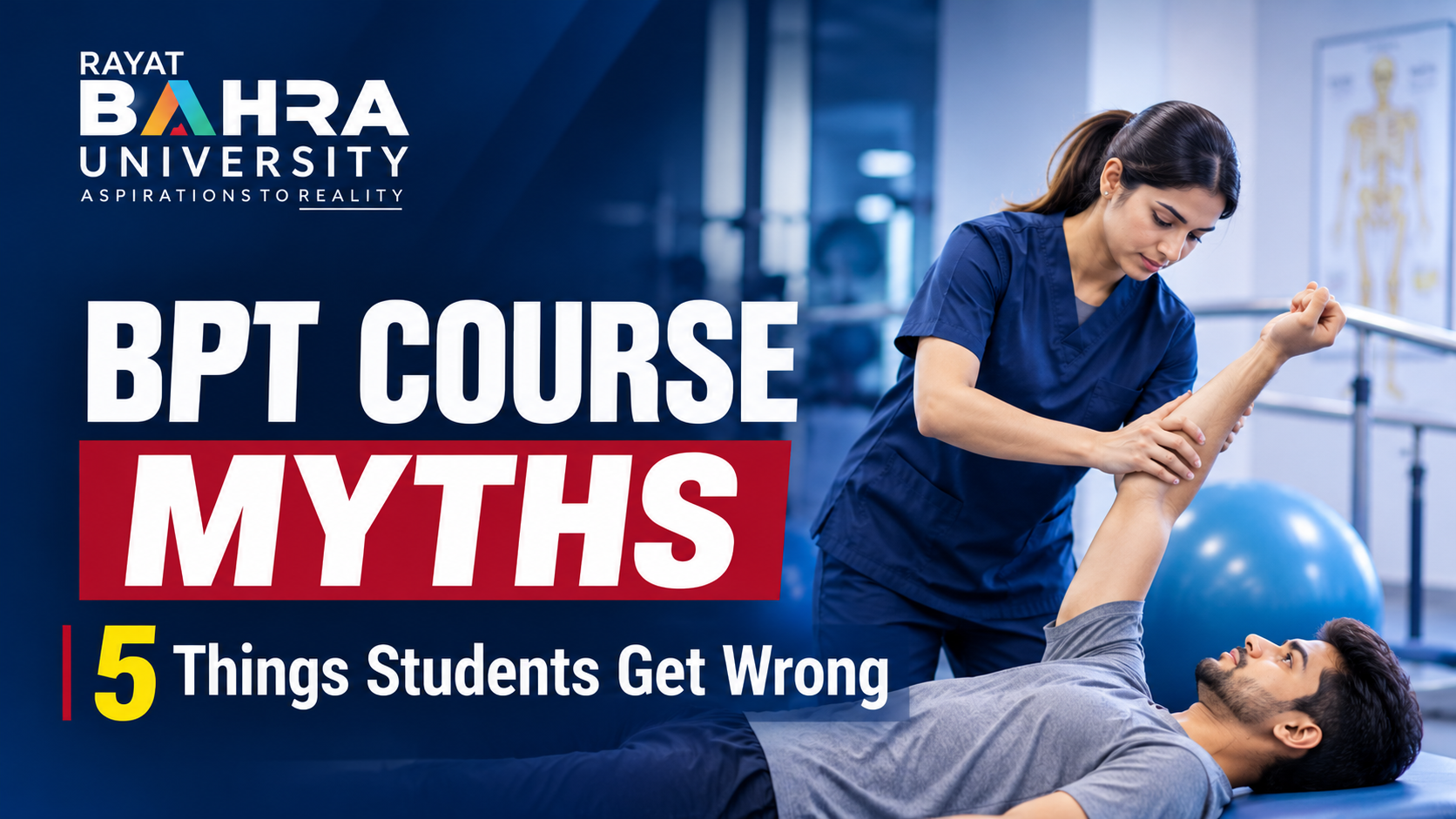
Imagine a cricketer who has just torn a ligament, an elderly person learning to walk again after a stroke, and a child with a movement disorder. All three depend on the same professional to get their lives back on track: a physiotherapist. Yet when students hear “BPT,” many picture someone giving massages in a small clinic. That picture is incomplete, and it stops many good students from choosing this field. Let us break down five common myths about the Bachelor of Physiotherapy (BPT) at Rayat Bahra University (RBU), Mohali, and see what the reality looks like.
Table of Contents
1. Myth 1: “Physiotherapy Is Just Massage and a Few Exercises”
1.1 The Reality
Physiotherapy is a clinical science built on how the human body moves and heals. A physiotherapist first assesses the patient by testing strength, joint movement, balance, posture, and pain. Based on this, they design a treatment plan that may include therapeutic exercises, manual techniques, and electrotherapy using specialised equipment. They track progress at every visit and change the plan if the patient is not improving. Education and advice, such as teaching correct posture or home exercises, is also a major part of the job. Massage is only one small tool in a much larger toolbox.
1.2 What It Means for You
If you choose BPT, expect to study the human body in great detail rather than just learn a few techniques. Subjects like anatomy, physiology, biomechanics, and exercise therapy form the base of the course. You will practise assessment skills on real people under supervision, which builds both knowledge and confidence. The School of Medical and Allied Health Sciences at RBU offers two physiotherapy programs: B.PT and BPT (Lateral Entry). Students who enjoy science and helping people usually find this approach rewarding. Curiosity about how the body works will serve you well throughout the course.
2. Myth 2: “Physiotherapy Is Only for Sports Injuries”
2.1 The Reality
Sports physiotherapy is a popular branch, but it is only one part of the field. Physiotherapists help patients recovering from stroke, spinal cord injuries, fractures, and joint replacement surgeries. They also treat back and neck pain, arthritis, breathing problems, and conditions in children and older adults. Hospitals use physiotherapists in intensive care, orthopaedic wards, neurology units, and rehabilitation centres. Many people never play sports but still need physiotherapy to regain independence in daily life. This variety makes the profession useful in almost every stage of life.
2.2 What It Means for You
Because the field is so broad, you can discover your own area of interest during the course. Clinical postings let you see different types of patients and decide whether you prefer neurology, orthopaedics, paediatrics, or sports. Some students fall in love with working with elderly patients, while others enjoy the fast pace of sports rehabilitation. Keeping an open mind during your early years is a good idea. Talking to seniors and teachers about their experiences can also guide your choice. Later, postgraduate study allows you to specialise further.
3. Myth 3: “The Course Is Easy and Mostly Practical”
3.1 The Reality
Many students expect BPT to be light on theory, but the first year is quite demanding. You must learn the bones, muscles, nerves, and organs of the human body, along with how each system works. Anatomy alone involves a large amount of memorisation, and biomechanics requires logical thinking. Practical skills are important, but they rest on a solid theoretical base. The course also includes clinical training, which means spending real hours with patients. It is a serious health science and needs steady, consistent effort.
3.2 What It Means for You
Eligibility reflects this seriousness, since candidates are generally expected to have completed 10+2 with Physics, Chemistry, and Biology. The duration is also longer than many students expect. BPT at Rayat Bahra University is a four and a half year full-time course, which includes a six-month internship. That internship is valuable, because it puts you in a real clinical setting before you graduate. Start building good study habits from the first semester, especially for anatomy. Regular revision and practice on models and partners make the work much easier. Students who stay consistent usually find the later years more enjoyable.
4. “A Physiotherapist Can Only Work in a Small Clinic”
4.1 The Reality
Clinics are one option, but graduates can work in many other places. They can join hospitals, rehabilitation and wellness centres, sports academies, fitness clubs, and special schools. Some work in home-care services, where they visit patients who cannot travel. Others move into teaching, research, or the health-technology sector. After gaining experience, many open their own practice and build a reputation through results. Career growth depends on skill, communication, and continued learning.
4.2 What It Means for You
Use your internship and clinical postings to explore which setting suits you best. Build soft skills such as patience, empathy, and clear communication, because patients must trust you to follow their plan. Join workshops and certification courses in areas like manual therapy or sports taping to add to your profile. Keep your record of cases and experiences organised, as it will help during job applications. If you want to practise independently, learn the basics of running a clinic, including costs and patient handling. Planning ahead makes the shift from student to professional smoother.
5. Myth 5: “BPT Is the End of the Road”
5.1 The Reality
Some students believe that a bachelor’s degree is all there is in physiotherapy. In fact, the field has a clear postgraduate path. RBU’s School of Medical and Allied Sciences offers a two-year full-time Master of Physiotherapy in Sports Physiotherapy. A master’s degree lets you specialise in areas like sports, neurology, or orthopaedics and opens doors to senior clinical and teaching roles. Some graduates also pursue research or go abroad, though overseas practice needs local licensing exams. Learning never really stops in this profession, since new techniques keep emerging.
5.2 What It Means for You
If you are ambitious, think about your postgraduate plans early in the course. Keep your grades strong and take part in seminars or small research projects. Reading journals and following new treatment methods will help you stay ahead. The lateral entry route also exists for diploma holders who want to upgrade their qualification to a bachelor’s degree. Choosing a university that offers both undergraduate and postgraduate options makes it easier to continue studying. A long-term view will make your degree more valuable.
6. Quick Checklist Before You Apply
Before applying, confirm that your Class 12 subjects match the eligibility rules, and keep your mark sheets, ID proof, and photographs ready. Ask the admissions office about the current fees, seat availability, hostel options, and clinical training facilities. If possible, visit the campus, meet current students, and see the labs and practice areas yourself. Think honestly about whether you enjoy science, working with people, and being physically active. These questions will tell you more about your fit than any ranking or advertisement. Take your time, because a well-informed choice usually leads to a happier career.
To know more about the BPT program and admissions, visit the official page: https://admissions.rbuchd.in/paramedical-admissions-2025