
From Workshop to Workforce – How Rayat Bahra University’s School of Polytechnic and Skill Development Is Redefining Technical Education
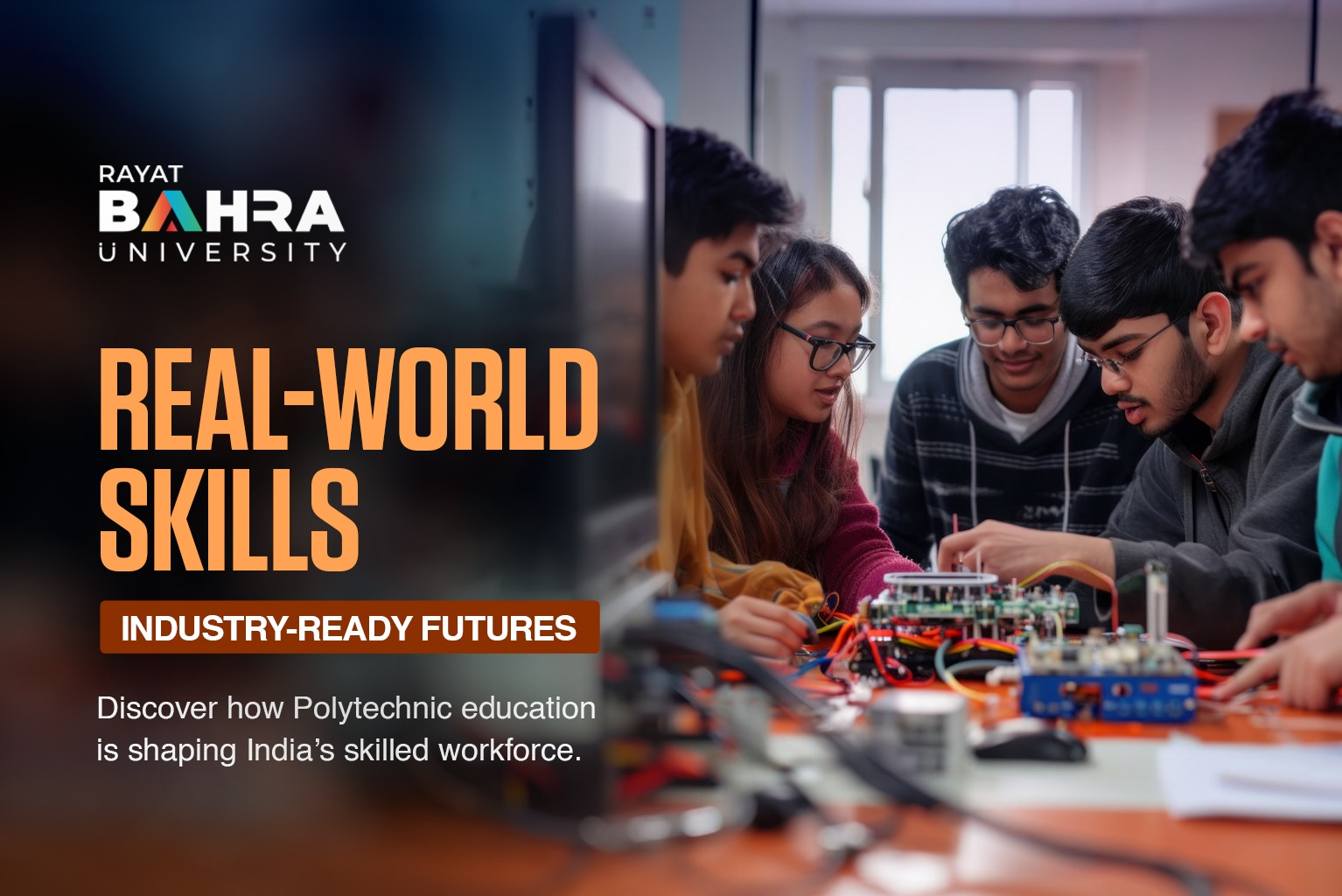
India is building. Highways, metro lines, smart cities, factories, power plants, data centers, electric vehicle plants, and renewable energy infrastructure are all going up simultaneously across the country. And behind every one of these projects, behind every machine, every circuit board, every automated assembly line, and every piece of engineered infrastructure, there is a trained technical professional who knows how to build, operate, maintain, and fix it. That professional is a diploma engineer. And the demand for them in India has never been higher.
Yet for years, polytechnic education has been treated as the backup option. The degree students didn’t want. The path taken when nothing else worked out. That perception is outdated, and the job market has known it for some time. Rayat Bahra University’s University School of Polytechnic and Skill Development has been quietly proving it wrong since 2014, and the students who made the decision to study here are building careers that speak for themselves.
Why Polytechnic Education Is Having Its Moment
India’s industrial and infrastructure boom, driven by initiatives like Make in India, Skill India, and the National Infrastructure Pipeline worth over INR 111 lakh crore, has created a structural, sustained demand for diploma-level technical professionals that four-year engineering programs alone cannot meet.
An impressive 92.7% of polytechnic graduates find employment within six months of graduation, and the best polytechnic courses offer starting salaries between INR 2 and INR 5 LPA with clear growth paths in sectors like renewable energy, IT, manufacturing, and automobile production. With experience and the right certifications, diploma engineers in niche areas like PLC, SCADA, BIM, and CNC programming can push earnings to INR 8 to 12 LPA. Government jobs after polytechnic remain a strong option as well, with PSUs like NTPC, BHEL, and state PWDs actively recruiting diploma holders. Companies like Texas Instruments, GE Aerospace, and Maruti Suzuki all recruit polytechnic graduates.
India has over 4,300 polytechnic colleges offering diplomas in branches like Mechanical, Civil, Electrical, Electronics, and Computer Science. Diploma holders are recognized at NSQF Level 5, often allowing lateral entry into the second year of B.Tech or B.E. programs. This combination of immediate employability and a clear pathway into higher engineering education is what makes the polytechnic route one of the most strategically intelligent career choices available to a Class 10 or Class 12 student in India today.
The India Skills Report 2025 makes the urgency even clearer, indicating that nearly 25% of all jobs will undergo significant changes in the next five years, with adaptable, practically trained workers being the ones who navigate that change most successfully. Polytechnic graduates, trained from day one to work with their hands and their minds simultaneously, are exactly the kind of adaptable technical professionals that Indian industry is seeking.
The University School of Polytechnic and Skill Development at Rayat Bahra University
Established in August 2014, the University School of Polytechnic and Skill Development at Rayat Bahra University was built to address a very specific problem: the growing gap between the number of technically trained professionals India’s industry needs and the number its education system is producing. Since its inception, the school has been at the forefront of innovation and has attained a leading position in the field of technical and professional education.
The school’s mission is grounded in a belief that speaks directly to what employers actually want: to educate and build engineers who not only possess deep technical excellence, but also creativity, cultural and entrepreneurial skills that come from the interdisciplinary nature of courses, which are an integral part of the curriculum. This is not a school that produces technicians who can only follow instructions. It is a school that produces technical professionals who can think, adapt, and lead on the workshop floor and beyond it.
The School of Polytechnic and Skill Development aims to provide a conducive ambience with innovative and engaging teaching methods, guest speakers from industry, and key research partnerships. Group learning is actively encouraged, and the program imparts value-added soft skills alongside technical training, with internships in the final semester exposing students to real-life situations and developing decision-making and situation-handling attributes in critical circumstances.
Programs Offered – Six Diploma Specializations Under One Roof
The University School of Polytechnic and Skill Development currently offers six three-year diploma programs, with an approved intake of 30 students per program, totaling 180 seats across all specializations. Each program is designed with a pragmatic vocational education orientation that covers the entire spectrum of engineering disciplines.
- Diploma in Civil Engineering: Civil engineering is the backbone of India’s infrastructure revolution. From roads and bridges to residential complexes, industrial buildings, and urban planning projects, civil engineers with hands-on diploma training are among the most consistently employed technical professionals in the country. Graduates work as site supervisors, draftsmen, quality inspectors, and project coordinators across construction companies, government public works departments, and real estate developers.
- Diploma in Computer Science Engineering: The digital economy has created an enormous appetite for technically trained computer science professionals at every level. The EV sector has become a particularly strong new employer for computer science diploma holders, as electric vehicle companies need people who understand both computing systems and electrical hardware. IoT device manufacturing, network hardware installation, and software support roles are also consistent growth areas. Starting salaries in Computer Science Engineering range from INR 3 to INR 5 LPA, with strong upward growth as professionals build specialized skills in cloud, cybersecurity, or AI-integrated systems.
- Diploma in Electrical Engineering: With increasing demand for renewable energy, smart grids, and industrial automation, electrical engineering diploma graduates are highly relevant across power plants, electrical maintenance companies, and electronics manufacturing industries. The government’s push toward solar and wind energy infrastructure has particularly accelerated demand for trained electrical professionals. Freshers can expect entry-level salaries ranging from INR 14,000 to INR 22,000 per month, with significant growth in both private and public sector roles.
- Diploma in Electronics and Communication Engineering: Electronics and Communication Engineering graduates find opportunities in telecommunications, broadcasting, semiconductor manufacturing, consumer electronics, and the rapidly growing IoT and embedded systems sectors. With 5G infrastructure rollout gathering pace across India and the semiconductor manufacturing push under the India Chip programme, the timing for an ECE diploma has rarely been better.
- Diploma in Mechanical Engineering: Mechanical engineering is the most globally portable diploma on this list. India’s manufacturing sector absorbed over 12 lakh workers in 2023-24, and diploma-level mechanical engineers fill production supervisor, quality control, and maintenance technician roles consistently across that base. Automation and robotics are changing the shop floor, with Industry 4.0 setups needing technicians who can work alongside automated systems, maintain robotic arms, and read CNC programs. Career roles include production supervisor, maintenance technician, quality control inspector, and machine operator.
- Diploma in Automobile Engineering: The automobile industry in India is undergoing its most significant transformation since its inception, driven by the shift toward electric vehicles, connected cars, and advanced driver assistance systems. Automobile Engineering diploma graduates are entering one of the most dynamic employment sectors in the country, with opportunities in vehicle manufacturing, service and repair, EV battery systems, and automotive electronics. The school’s 5-day Auto Tech Intensive Skill Boot Camp at the Royal Enfield Training Center, focused on modern automotive technologies including engine systems, diagnostics, maintenance, and emerging trends, is a direct example of the kind of industry-connected practical training that gives RBU polytechnic students a genuine edge.
- Lateral Entry Program: For students who have already completed their Class 12 with a science background or hold an ITI certificate, a Lateral Entry option is also available, allowing direct entry into the second year of the diploma program and reducing the total duration to two years. This pathway provides a faster route to diploma qualification for students who already have foundational technical exposure.
The SPSD Advantage – What Makes This School Different
- Industry-Connected Learning From Day One: The School of Polytechnic and Skill Development does not wait until the final semester to connect students with the industry. Guest speakers from the industry are a regular feature of the academic calendar, bringing real-world technical insights into the classroom and giving students direct exposure to the professional standards, workplace expectations, and emerging technologies they will encounter after graduation.
- Industrial Visits That Go Beyond Observation: In February 2026, the University School of Polytechnic organized an industrial visit to Wonder Automation for approximately 50 students from the EE and ECE departments. During the visit, students were introduced to PLC systems, industrial control panels, sensors, and modern automation technologies. Technical experts provided detailed explanations and live demonstrations of industrial processes, enabling students to gain practical insights into exactly the kind of automation systems they will be working with in their careers.
- Skill Boot Camps With Industry Partners: The school successfully organized a 5-day Auto Tech Intensive Skill Boot Camp at the Royal Enfield Training Center, focused on modern automotive technologies including engine systems, diagnostics, and maintenance. This kind of structured, industry-partnered skill training outside the regular curriculum is what separates a polytechnic program that genuinely prepares students from one that merely teaches them.
- Final Semester Internship: The internship in the final semester exposes students to real-life work situations and develops the decision-making and situation-handling attributes that employers look for in every fresh hire. By the time SPSD graduates complete their diploma, they have not just studied engineering. They have practised it.
- Value-Added Soft Skills: Technical knowledge alone does not build a career. The School of Polytechnic and Skill Development actively imparts value-added soft skills alongside the technical curriculum, ensuring that graduates can communicate effectively, work in teams, and present themselves professionally in job interviews and workplace environments.
- Modern Infrastructure: The school operates within a campus equipped with a hi-tech IT infrastructure featuring an optical fibre-based 100 Mbps backbone connection network with controlled departments, hostels, and faculty residences, covering more than 200 nodes and guaranteeing internet access across the campus. Computing facilities include over 300 branded PCs from HP, Wipro, and IBM along with high-end workstations and servers for specific purposes. The library provides round-the-clock service, and spacious, well-ventilated classrooms with imported furniture and sophisticated teaching aids including overhead projectors and smart learning tools make the academic environment genuinely conducive to learning.
The Career Landscape After an SPSD Diploma
A diploma from the University School of Polytechnic and Skill Development at Rayat Bahra University opens career pathways across both the private and government sectors.
In the private sector, diploma engineers work as junior engineers and technicians in manufacturing companies, as production supervisors and quality control inspectors in automotive and industrial plants, as electrical maintenance technicians in power and infrastructure companies, as software support professionals and hardware engineers in IT and electronics firms, and as automobile service technicians and workshop managers in the rapidly growing EV and automotive sector.
In the government sector, polytechnic diploma holders are eligible for Junior Engineer positions in state PWDs, recruitment in PSUs like NTPC, BHEL, Coal India, and Indian Railways, apprenticeship programs under the National Apprenticeship Promotion Scheme, and technical assistant roles in various central and state government departments.
The lateral entry option is particularly valuable for students who want to go further academically. Diploma holders from RBU’s SPSD are eligible for direct entry into the second year of B.Tech or B.E. programs at engineering colleges across India, giving them a pathway into a full engineering degree without starting from scratch.
Placements – From the Workshop to the Workplace
Rayat Bahra University placements have recorded 50,000 jobs offered by over 1,175 recruiters visiting the campus, with 8,100 plus jobs offered across programs and the highest package offered reaching INR 1.25 Crore per annum across the university. The Training and Placement Cell operates with an in-house training team, placement officers, career counselors, industry training partners, and an entrepreneur development team, all working to connect graduating students with professional opportunities.
For polytechnic students specifically, the school’s record of a 95% success rate in outcomes reflects a placement infrastructure that takes technical education students seriously. The combination of practical training, industry visits, skill boot camps, and final-semester internships means that SPSD graduates arrive at placement drives with hands-on experience that general candidates simply cannot match.
The Bigger Picture
A 3-year polytechnic diploma gets dismissed a lot. Parents push four-year degrees, counselors steer students toward competitive entrance exams, and the polytechnic route gets treated as a fallback. The placement data tells a different story. The best polytechnic courses offer starting salaries between INR 2 and INR 5 LPA with clear growth paths, and in specialized technical roles, earnings grow significantly with experience and certification.
India’s economy is building at a pace that needs skilled, trained, practically competent technical professionals at every level of every industry. Rayat Bahra University’s University School of Polytechnic and Skill Development is producing exactly those professionals, through six engineering specializations, a final-semester internship, industry visits, skill boot camps with companies like Royal Enfield, a scholarship ecosystem that has disbursed INR 10 crore to over 2,500 students, and a placement infrastructure with over 1,175 recruiters.
For a student who finishes Class 10 or Class 12 and wants to enter the workforce quickly, earn a good salary, build specialist technical skills, and retain the option to pursue a B.Tech through lateral entry later, a diploma from the University School of Polytechnic and Skill Development at Rayat Bahra University is not a compromise. It is a strategy.